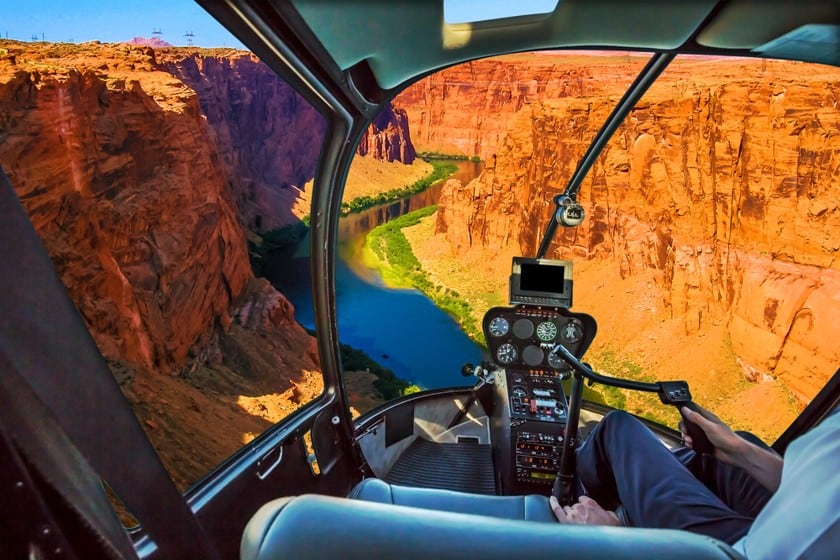
4 hr 30 min
Grand Canyon Helicopter Landing with Vegas Pickup
- Private experience
- Personal attention
- Premium amenities
- Free cancellation
Las Vegas Helicopter Ride to Grand Canyon — Champagne Landings & Skywalk Access
Soar over the Mojave in minutes, descend to the canyon floor in silence.
Compare fares, pick the fit — all bookings are mobile-voucher and eligible for free cancellation where shown.
4 hr 30 min
2 hr 30 min
3 hr 30 min
Selecting the right las vegas helicopter ride to grand canyon depends on your preference for an aerial-only overview versus a deeper experience that includes landing on the canyon floor. These las vegas helicopter ride to grand canyon tours provide unique perspectives of the Mojave Desert and Colorado River.
| Air-Only Flight Scenic Aerial Views |
Top pick Landing Tour Canyon Floor Access |
|
|---|---|---|
| Landing Location | None (Aerial Only) | 4,000 ft Below Rim |
| Includes Landing | — | |
| Scenic Highlights | Hoover Dam & Lake Mead | Champagne, River & Canyon Walls |
| Best For | Time-sensitive travelers | First-time visitors wanting immersion |
| See tickets & prices |
Verdict: Choose the landing las vegas helicopter ride to grand canyon ticket if you want to explore the canyon floor, or stick to the aerial-only option for a faster, efficient sightseeing tour.
Worth it for time-pressed travelers seeking aerial perspective
A las vegas helicopter ride to grand canyon costs significantly more than bus tours—expect to pay premium rates for aerial access—but the value equation shifts when you consider time savings and vantage point. Ground transportation requires eight to ten hours round-trip; helicopter tours from Las Vegas compress the journey to four hours total, with twenty to thirty minutes of flight time each way over Hoover Dam and Lake Mead. The landing experience at the West Rim floor delivers a perspective no overlook provides: standing 3,500 feet below the canyon rim with champagne service creates a distinct memory. For travelers on tight schedules or those who find long bus rides uncomfortable, the per-hour cost becomes defensible. If your trip allows a full day and you prefer interpretive hiking at the South Rim, ground transport to that deeper section offers better geological context. The helicopter trade is time for money, with the Skywalk and Strip flyover options adding marginal value unless you specifically want those add-ons.
Bottom line: The Grand Canyon helicopter tour from Vegas justifies its premium when your schedule cannot absorb a ten-hour bus commitment and the aerial route itself holds appeal.
They complement each other; most visitors who do both call the aerial view the more thrilling perspective while ground tours provide superior geological scale. Securing las vegas helicopter ride to grand canyon tickets allows for a swift departure, whereas bus excursions focus on slow-paced exploration.
|
Top pick Helicopter Tour |
Ground Tour | |
|---|---|---|
| Perspective and View | Aerial panorama of topography | Eye-level canyon rim vistas |
| Travel Time to Canyon | 45-60 minutes flight | 4.5-5 hours by road |
| Level of Physical Activity | Minimal (seated) | Moderate (walking/hiking) |
| Atmospheric Immersion | Cabin views with audio | Direct exposure to desert climate |
| Access to Remote Areas | Deep canyon floor landings | Designated park overlooks and trails |
| Transport Mode | Rotorcraft | Motorcoach or van |
| See tickets & prices |
Verdict: Opt for the las vegas helicopter ride to grand canyon tours for speed and exclusive floor access, or choose a ground excursion if you prefer hiking the trails and spending extended time at the rim.
Hand-picked experiences loved by thousands of travelers
3 hours
Free Cancellation
Descend below the canyon rim on a thrilling helicopter journey, then soar back over the Strip
2.5 hours
Free Cancellation
Soar directly from the Strip to the glass-bottomed Skywalk suspended 4,000 feet above the Colorado River
7 - 7.5 hours
Free Cancellation
Fly 4,000 feet above the Colorado River and descend into the canyon's dramatic depths on this full-day tour.
7 hours
Free Cancellation
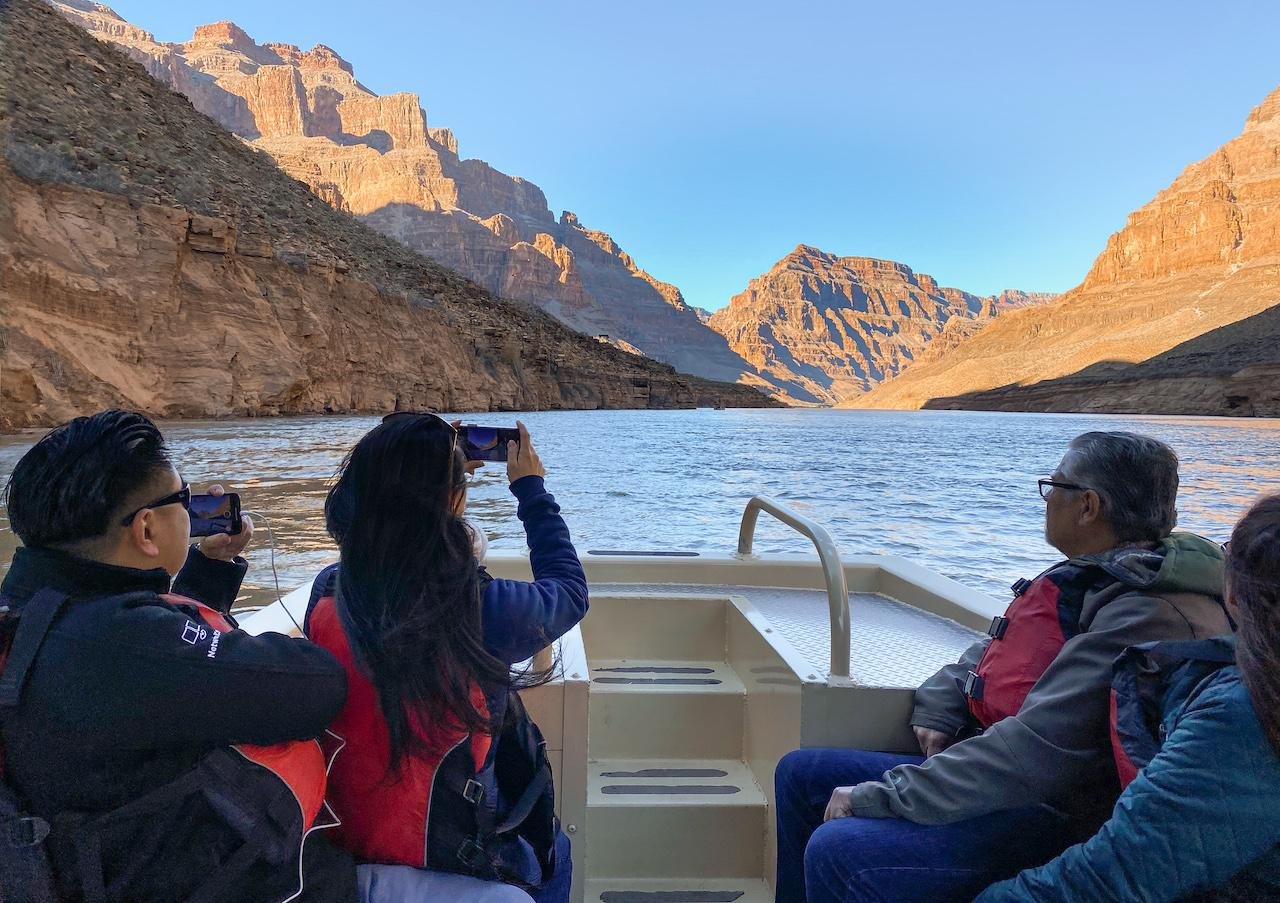
Fly into the canyon floor, cruise the Colorado River, and walk the glass bridge 4,000 feet above ground
4.5 hours
Free Cancellation
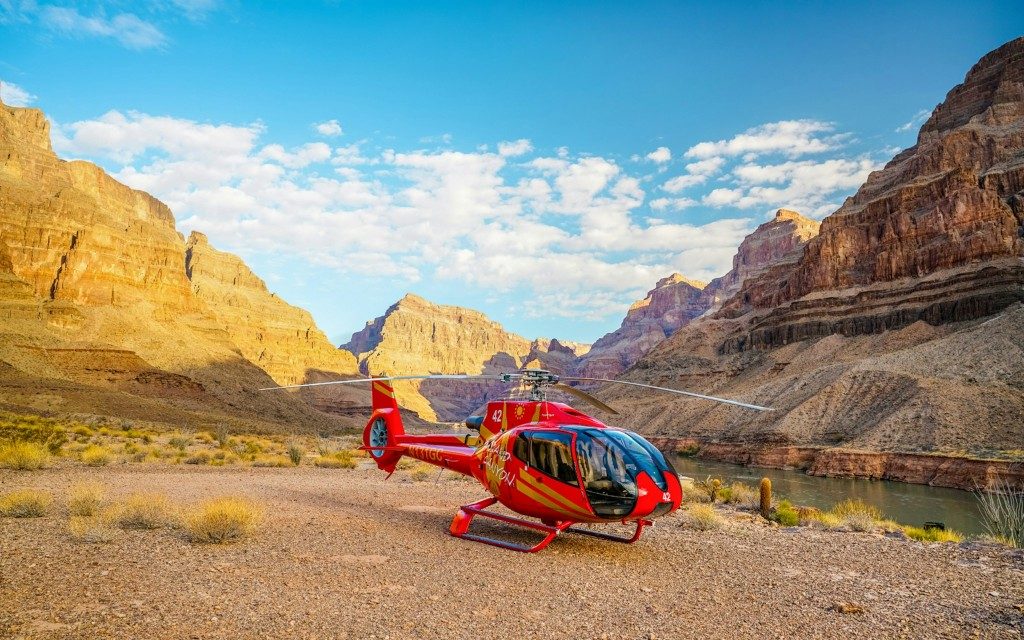
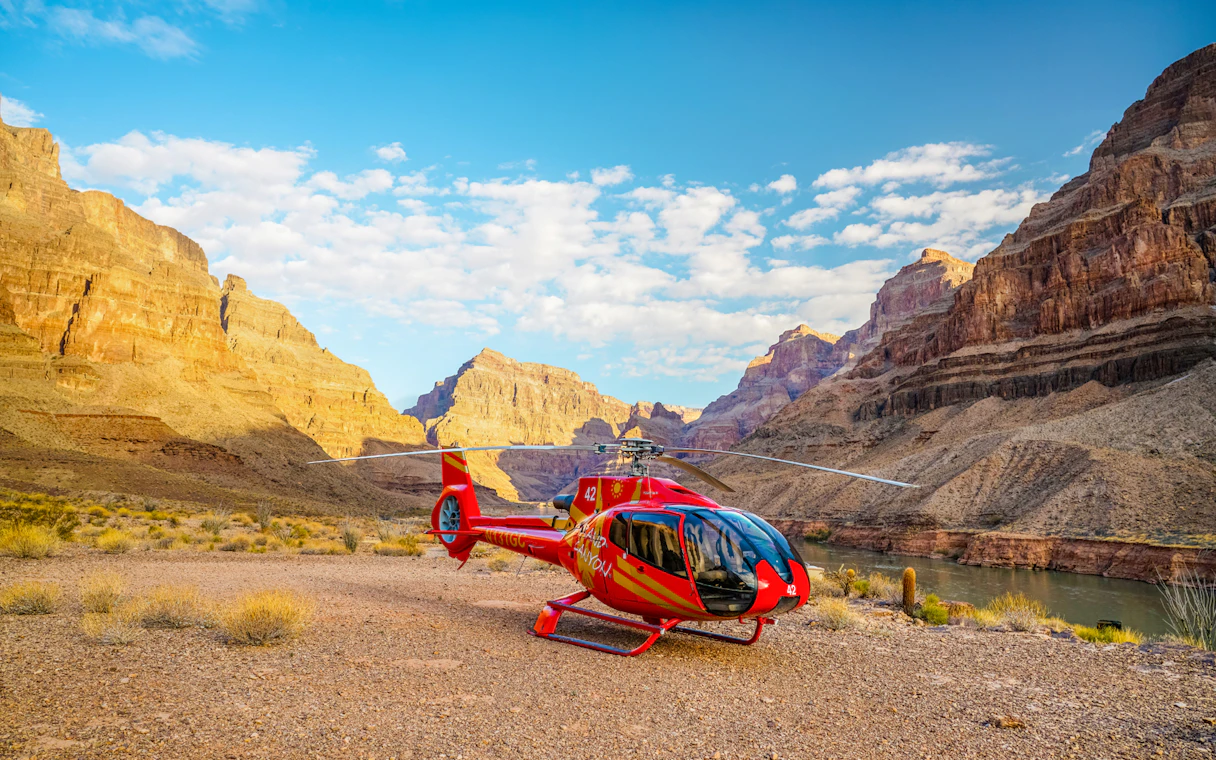
Fly from Vegas to the canyon floor, touch down 3,500 feet below the rim, and toast with champagne
7 hours
Free Cancellation
Fly by plane and helicopter, descend to the canyon floor, and cruise the Colorado River on this full-day adventure.
8.5 hours
Free Cancellation
Soar into the canyon by helicopter, dine cowboy-style, and explore desert landmarks on this all-day escape.
Arrive at the heliport for document verification and safety briefing.
Review of flight path and emergency procedures.
Aerial transit toward the canyon with views of Hoover Dam.
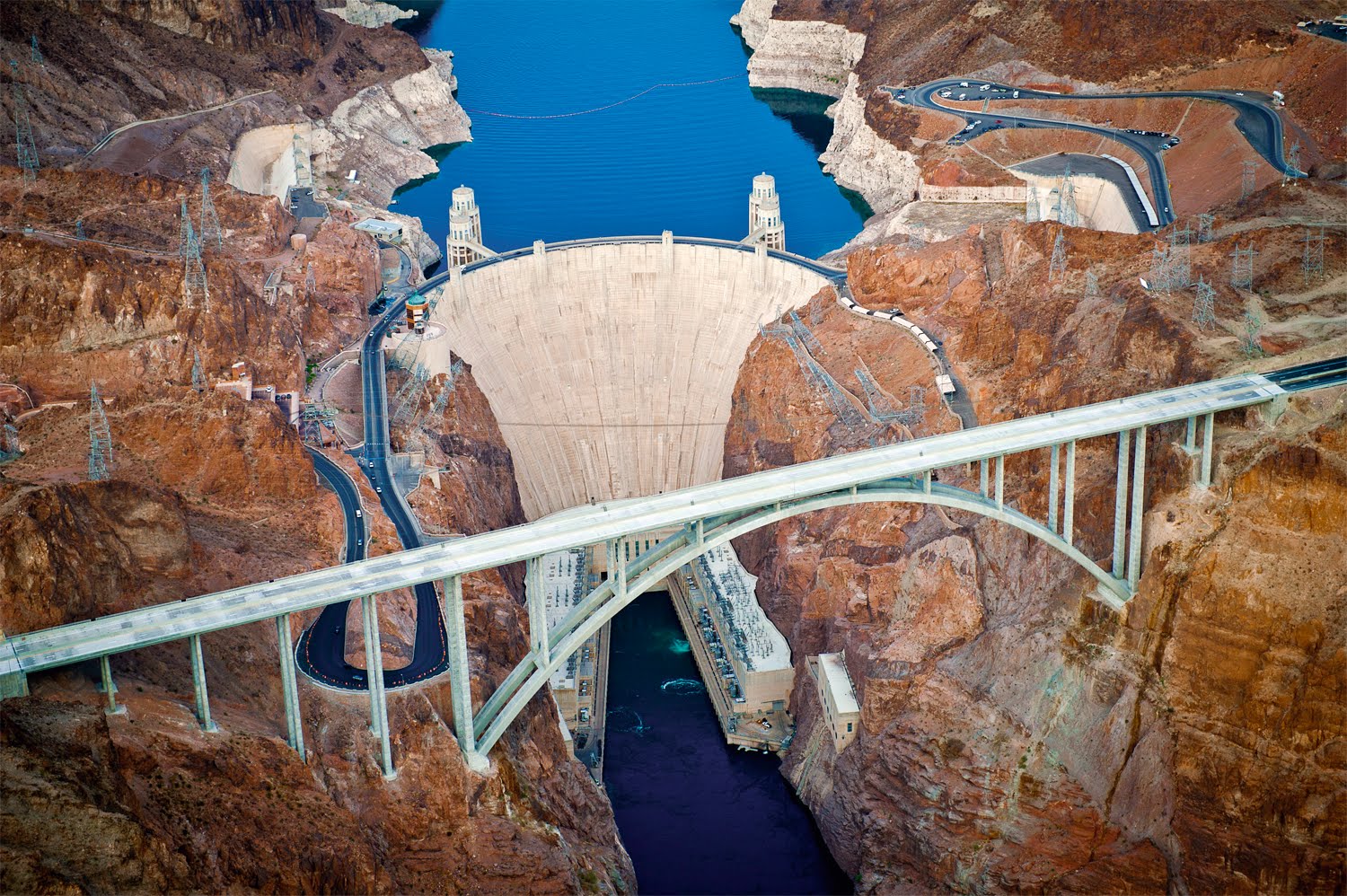
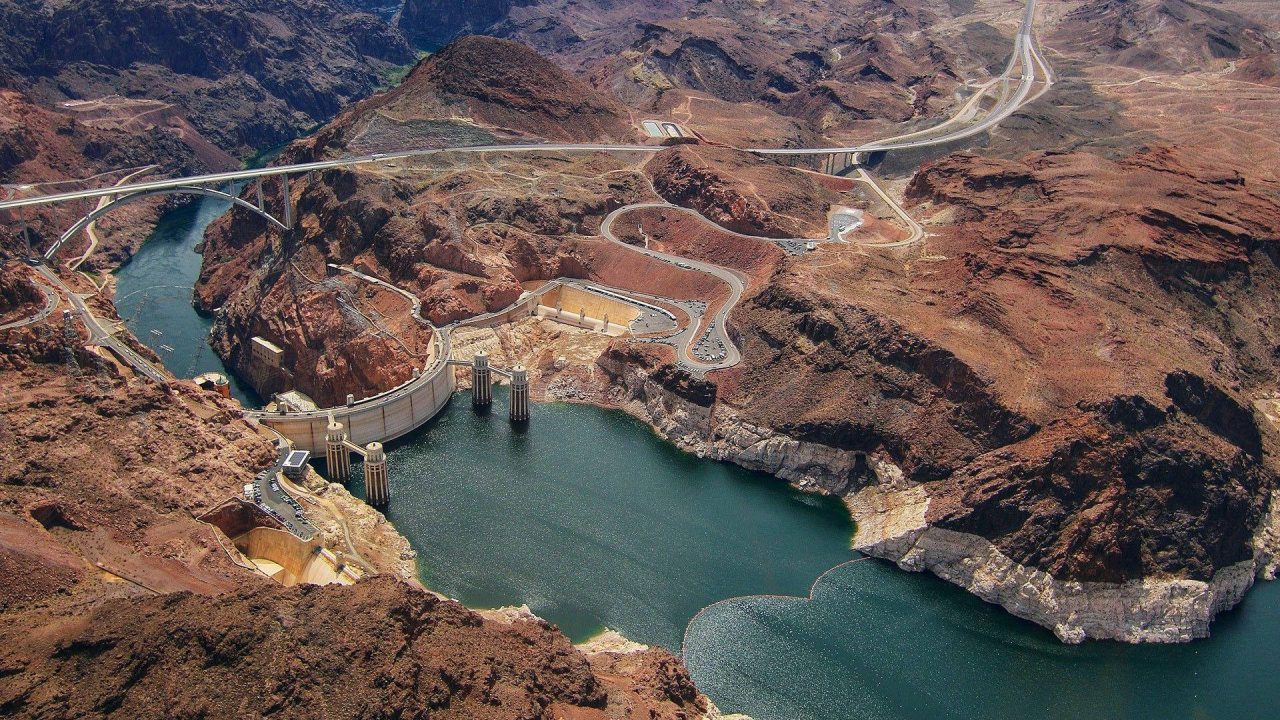
View the massive concrete arch dam from an aerial perspective while flying toward the canyon.
Experience the geological scale of the canyon walls from the air.
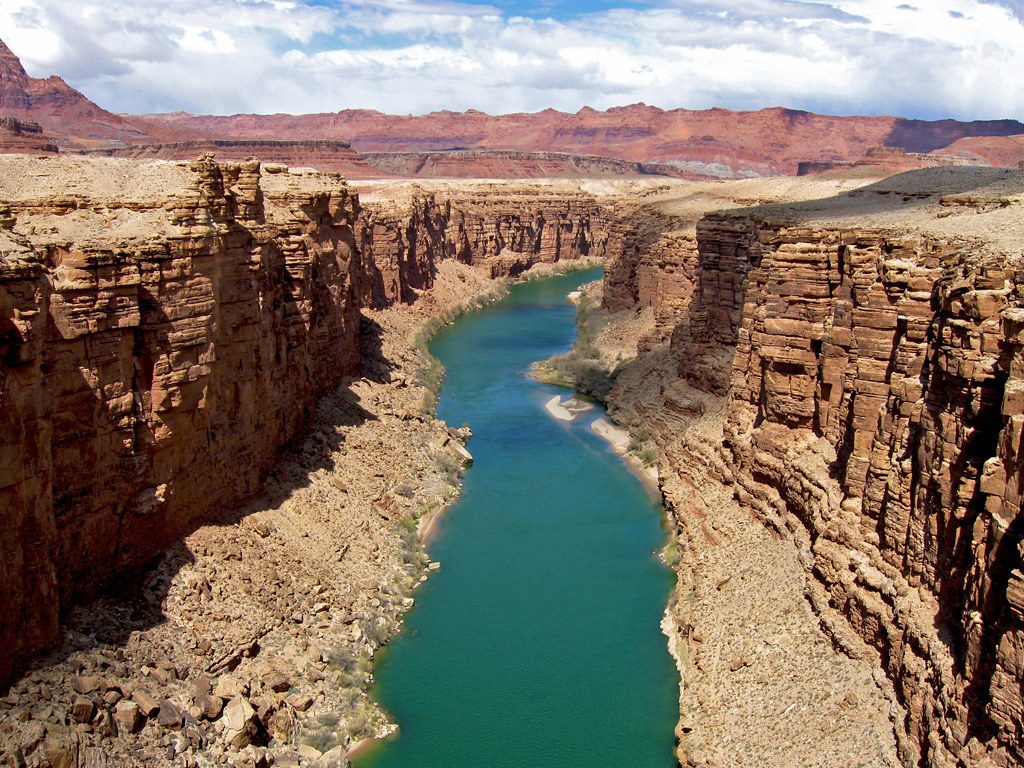
Follow the path of the river as it carves through the ancient rock formations.
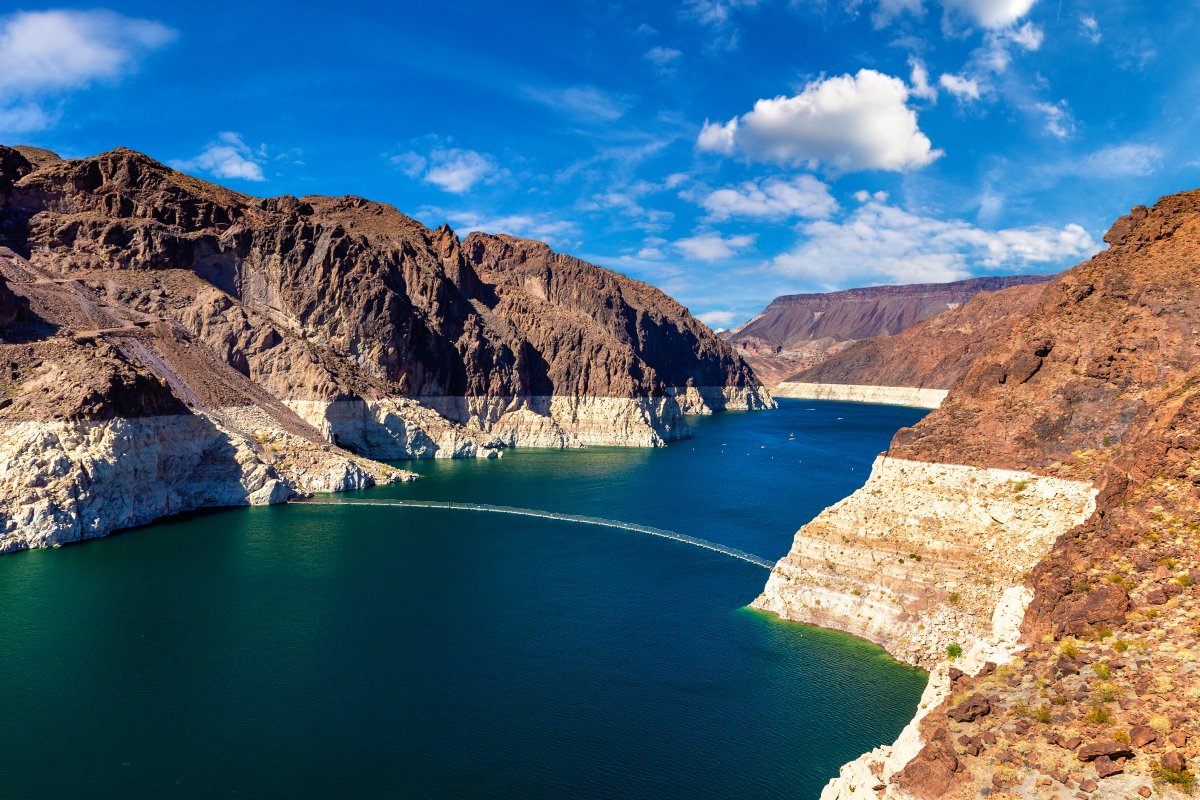
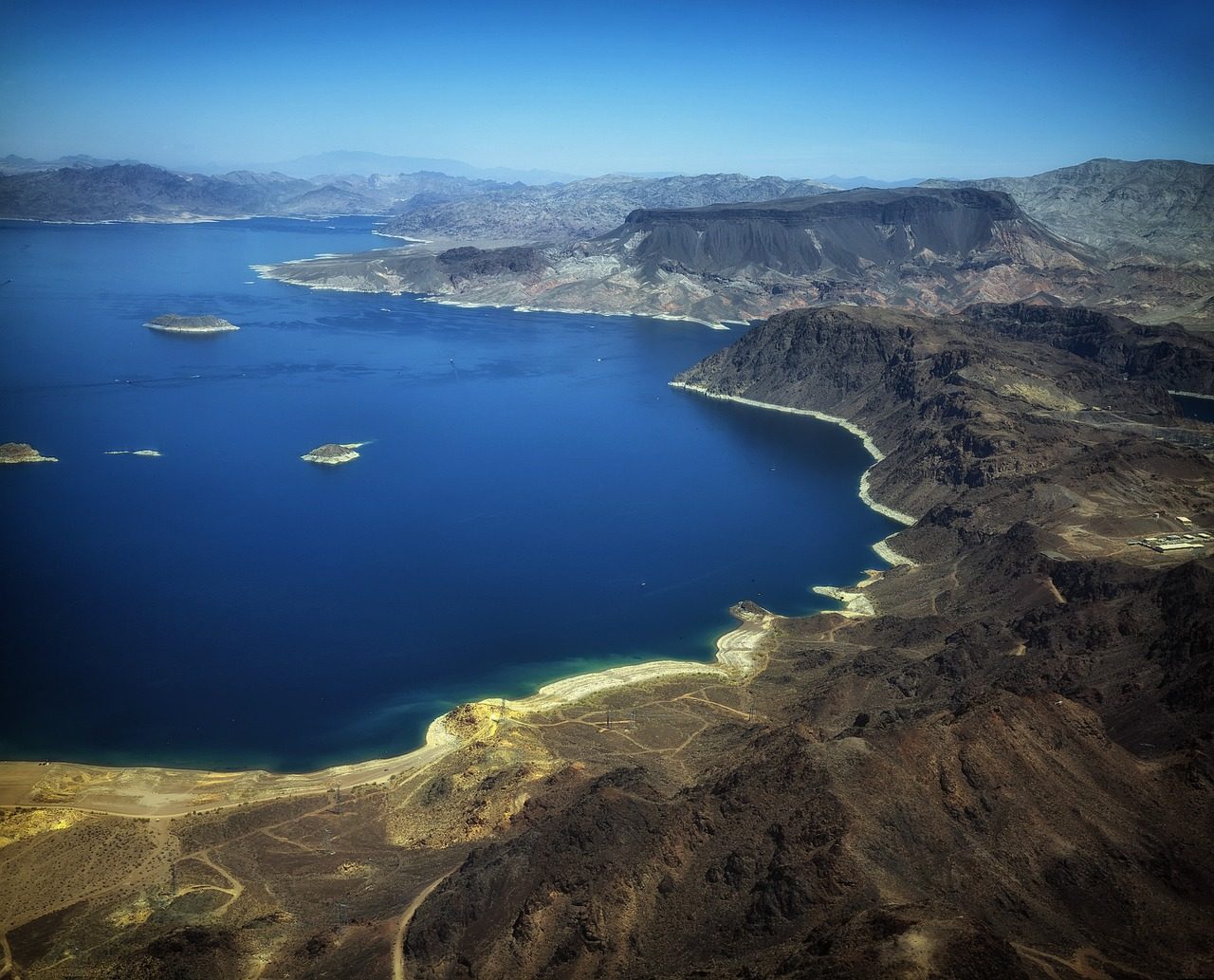
Observe the expansive blue waters against the desert landscape during the approach.
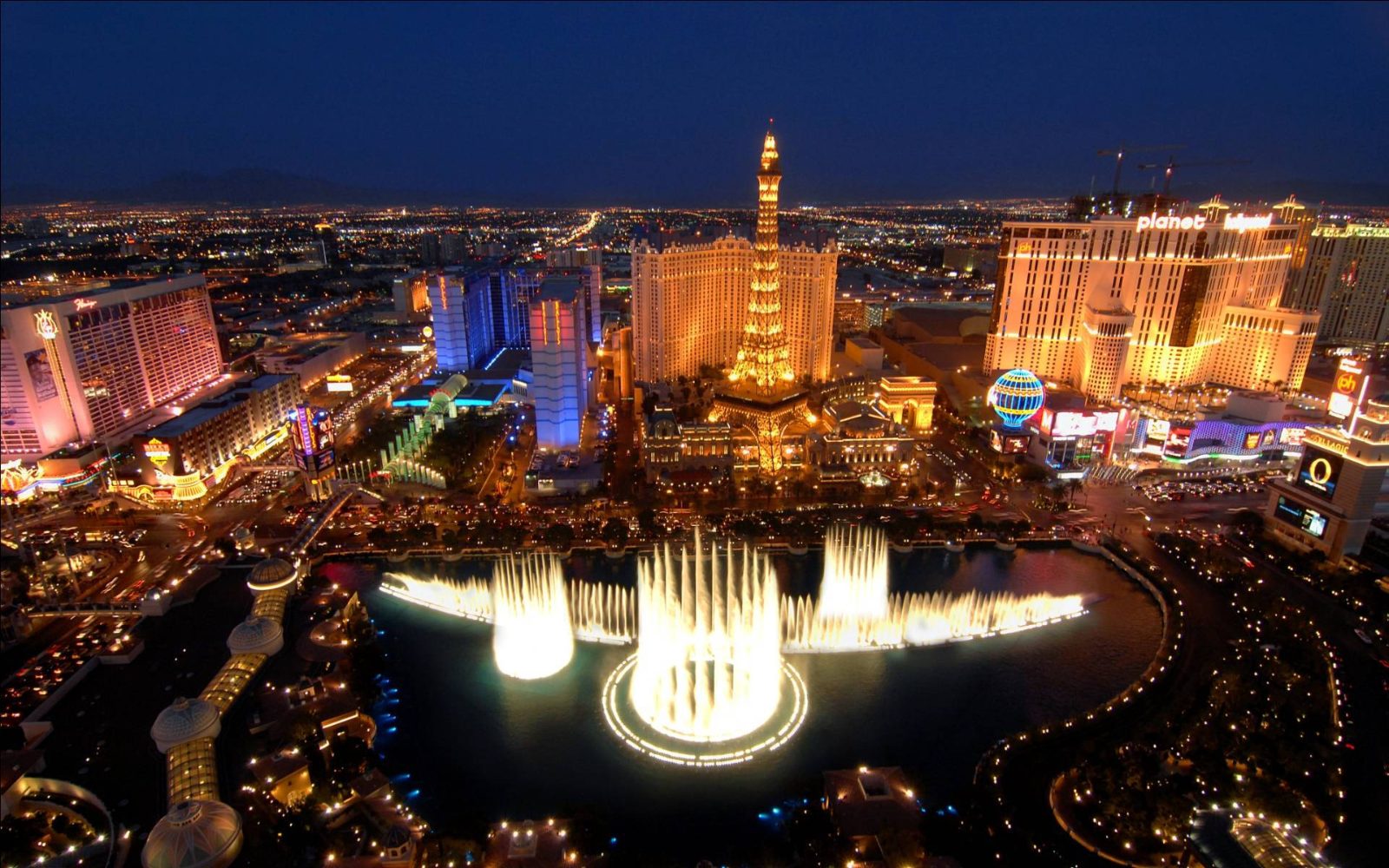
Witness the strip and surrounding valley during the ascent and descent.
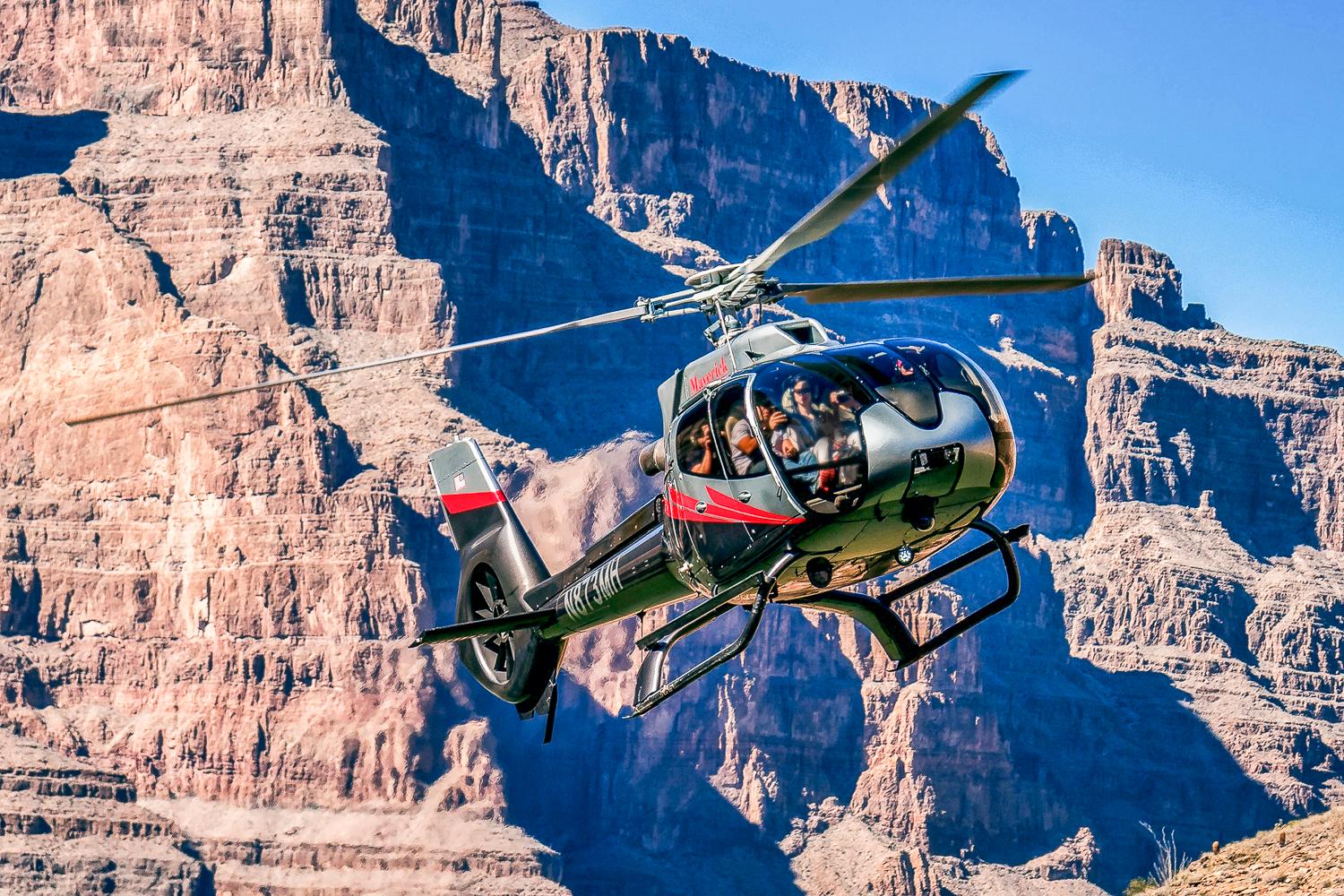
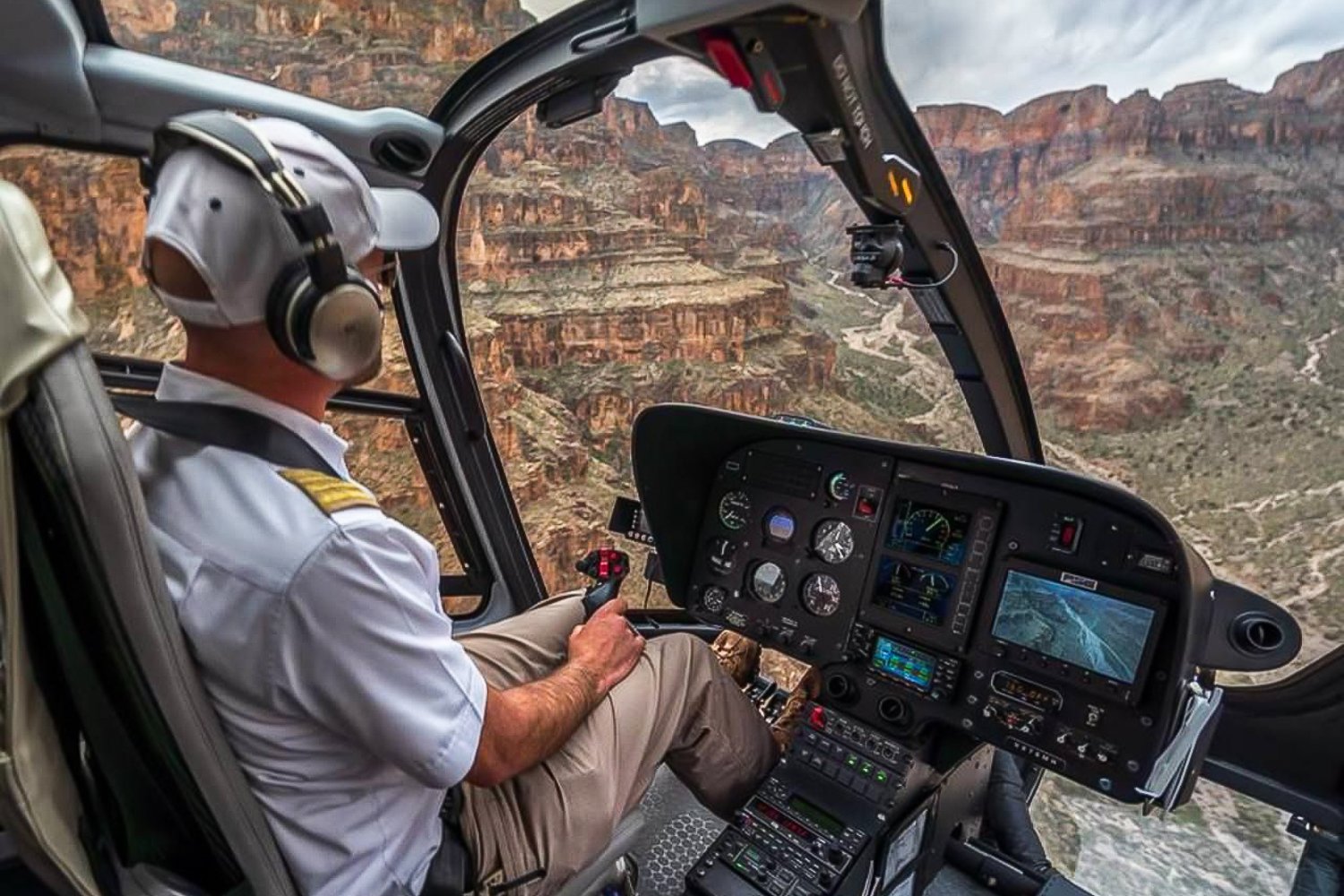
You meet your pilot at the private terminal, weight-balanced into one of six leather seats. The Bell 407 lifts vertically, banking southeast over the Stratosphere before the city grid dissolves into creosote flats. Hoover Dam's white arc appears at 15 minutes, Lake Mead a cobalt wedge between rust-colored bluffs.
You cross into Arizona at the Grand Wash Cliffs.
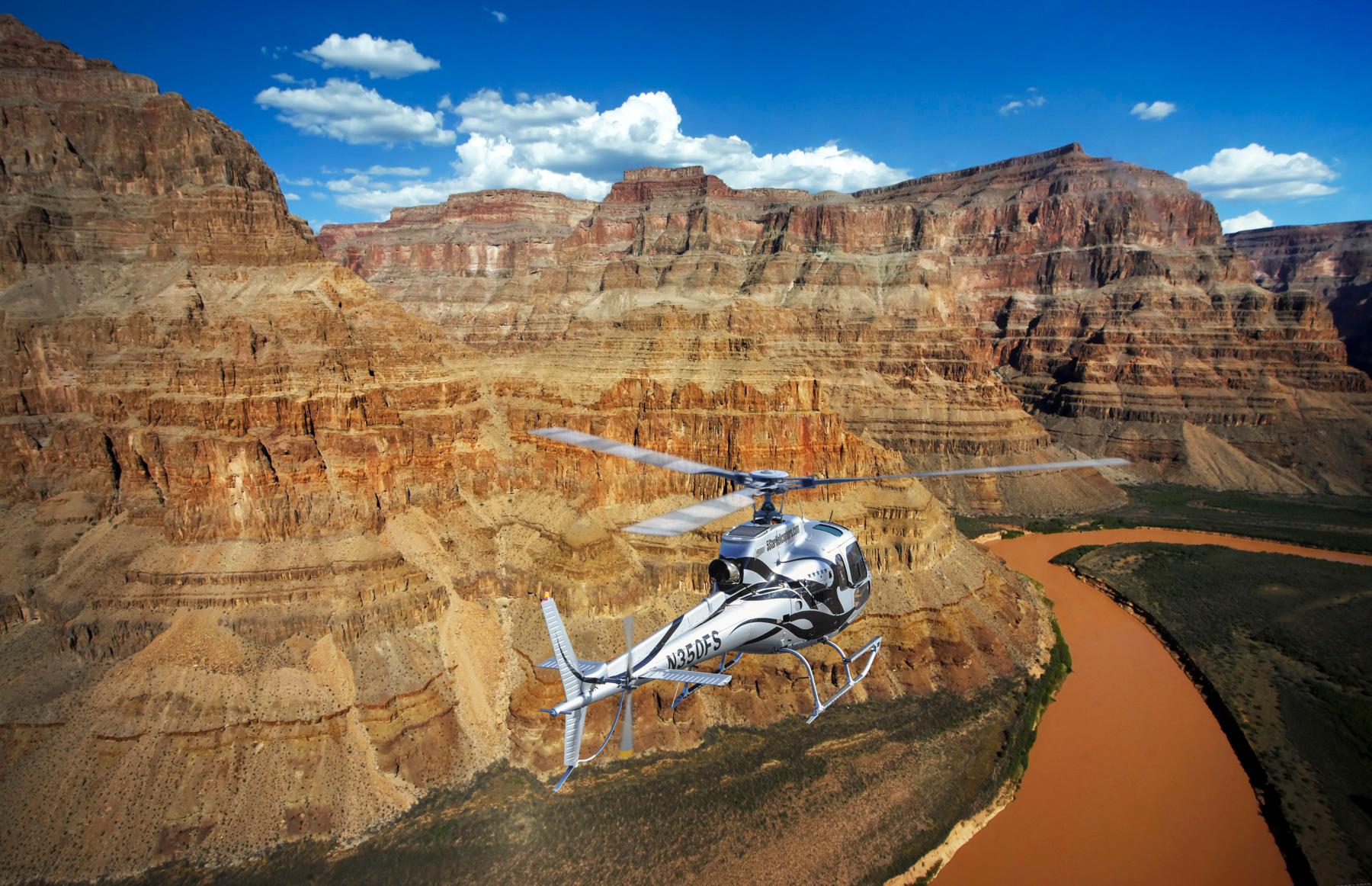
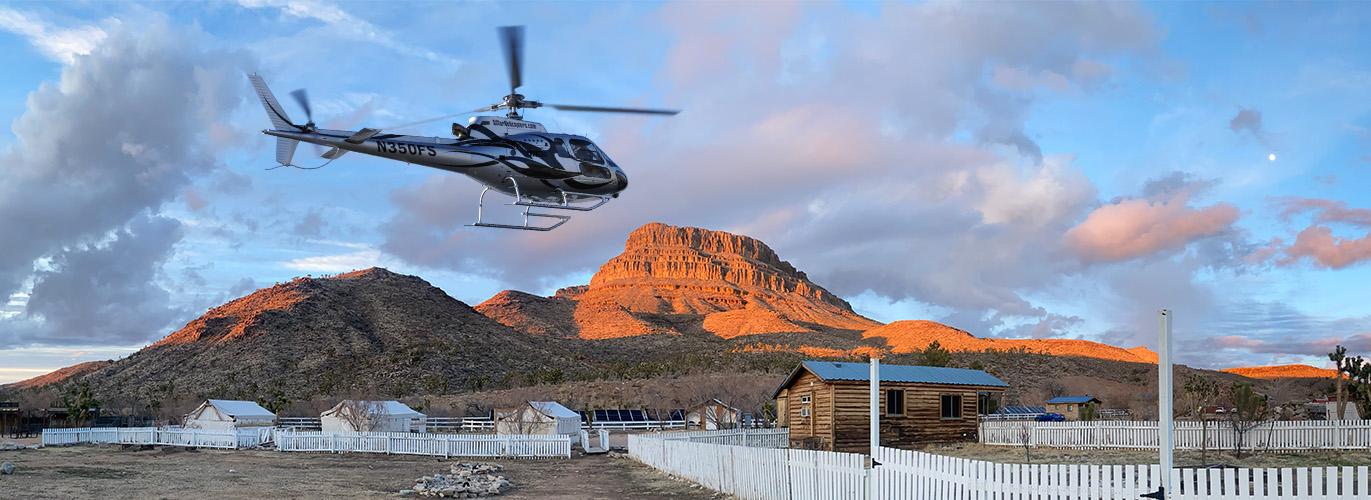
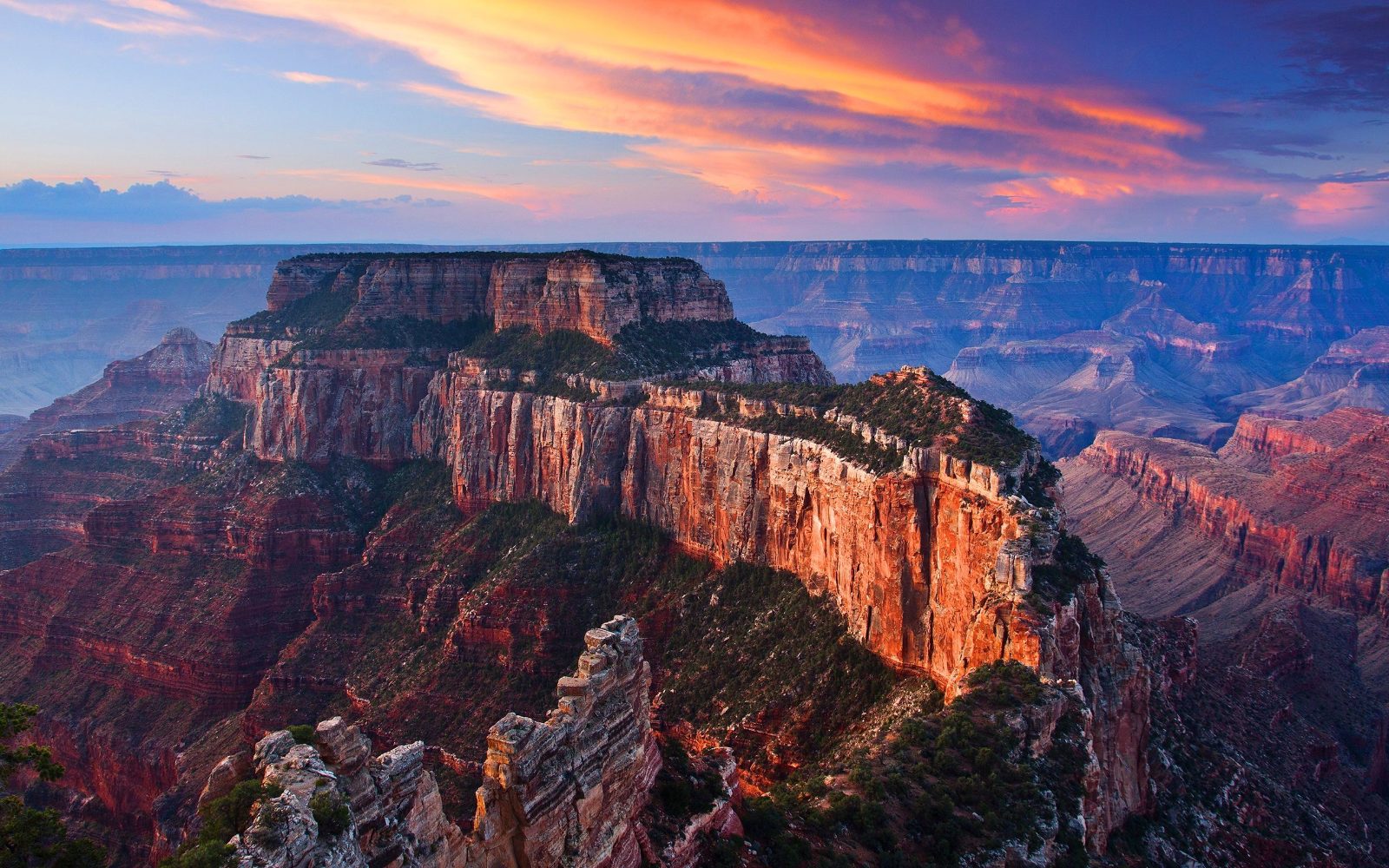
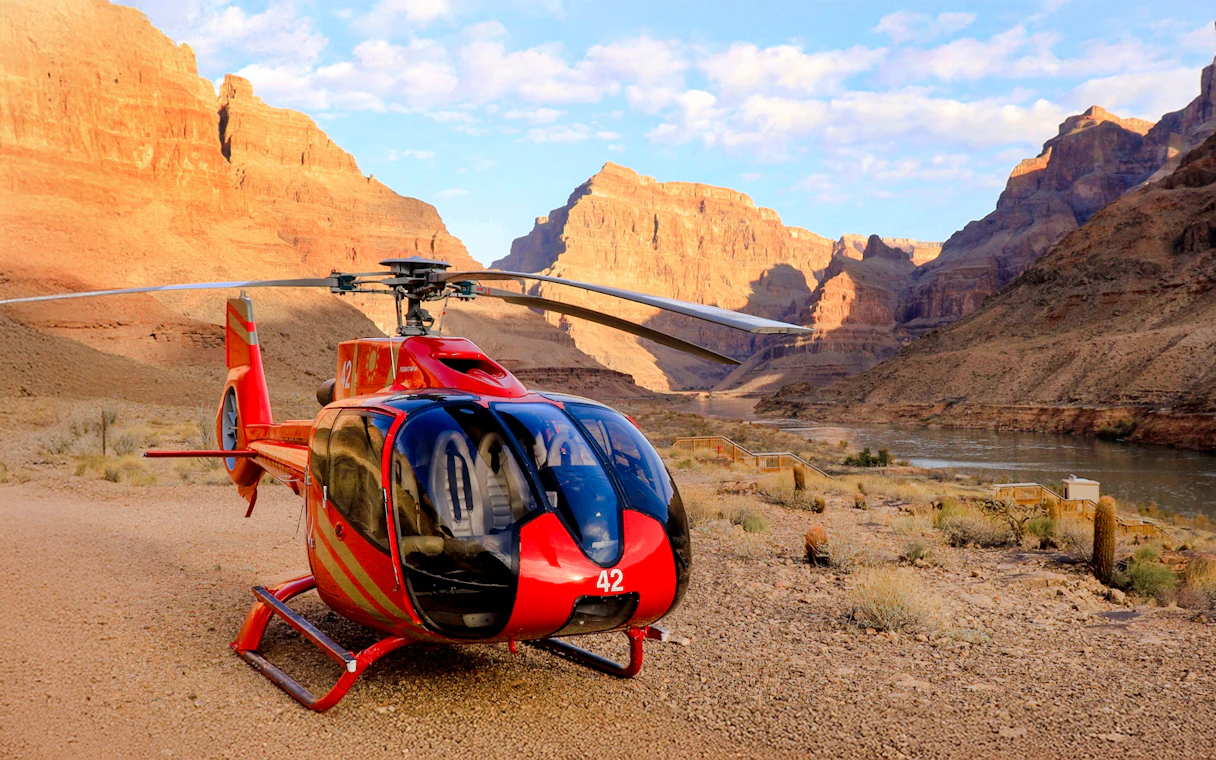
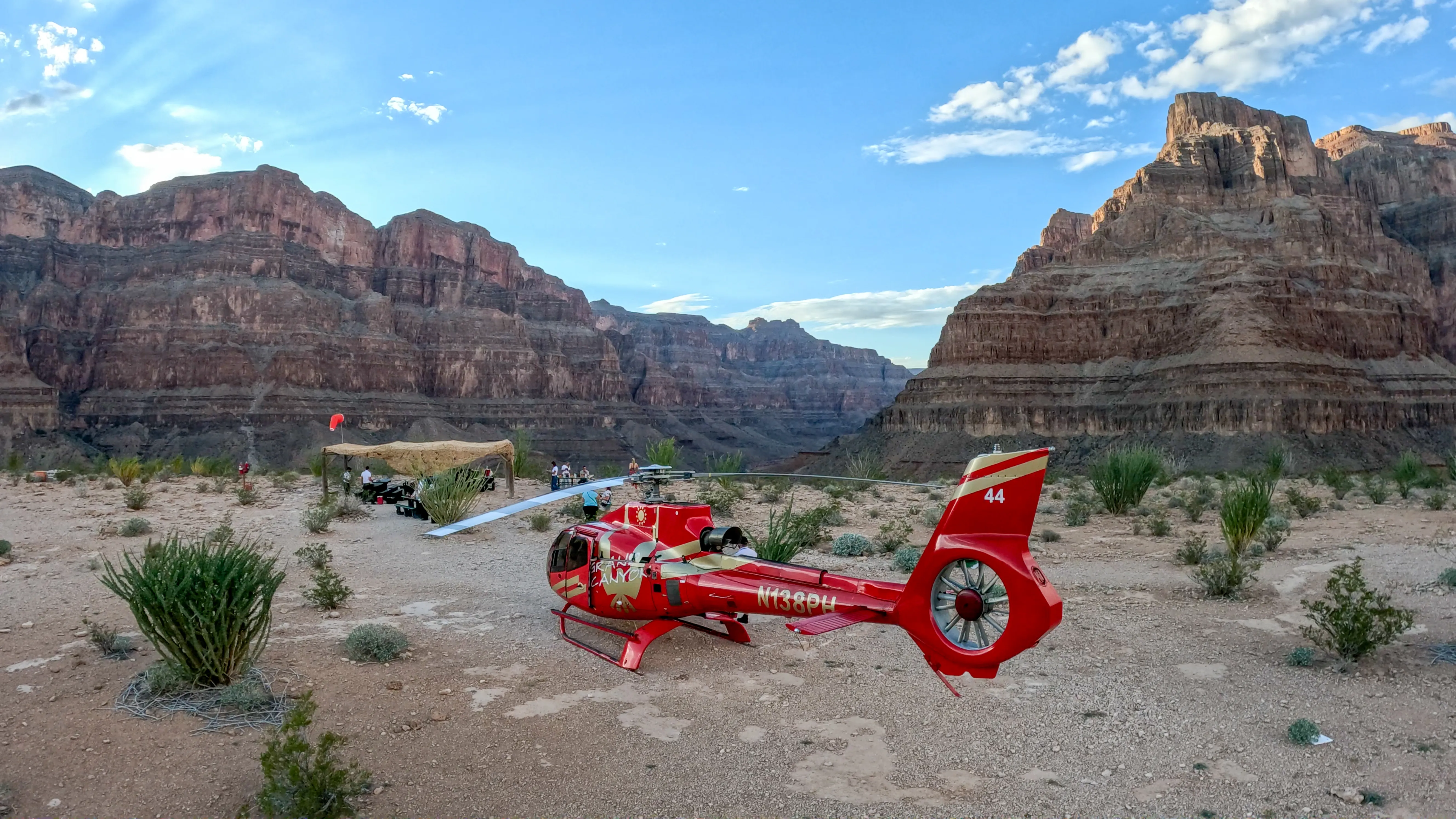
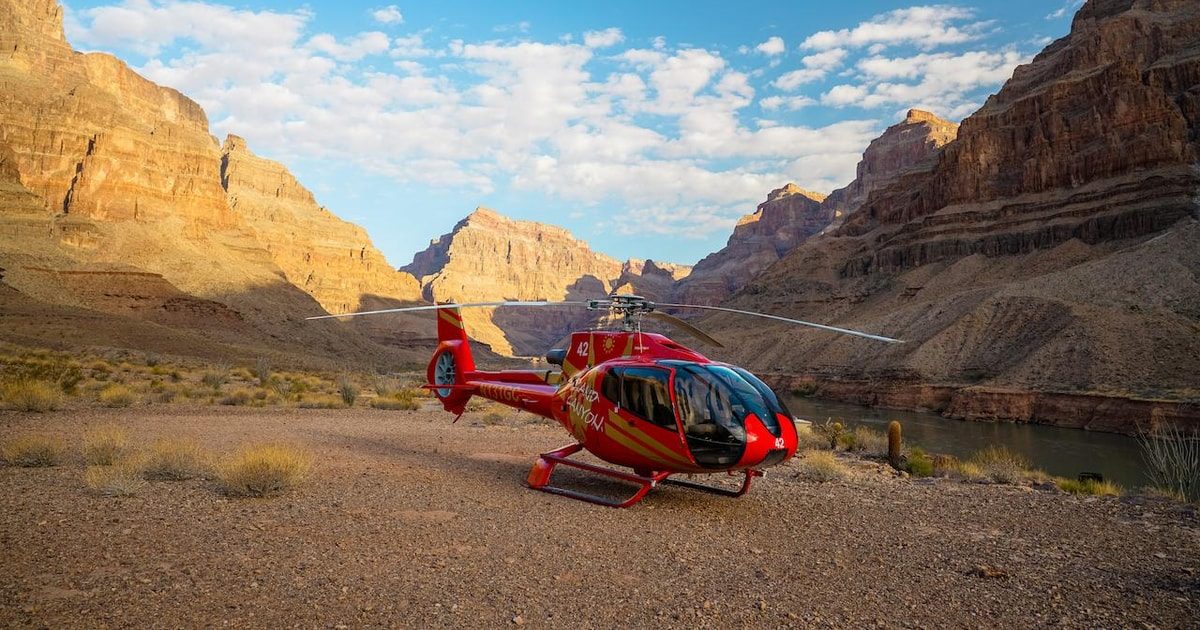
The canyon opens without warning—a mile-deep fissure splitting the plateau. Your pilot descends through sediment bands: cream Kaibab limestone, then rust Hermit shale, finally black Vishnu schist from the planet's first billion years. You touch down 300 feet from the riverbank, rotor wash scattering sand across the landing pad. Champagne pours; the canyon walls trap midday heat at 98 degrees even when the rim registers 72. You walk to the water's edge, where tamarisk roots grip boulders the size of sedans.
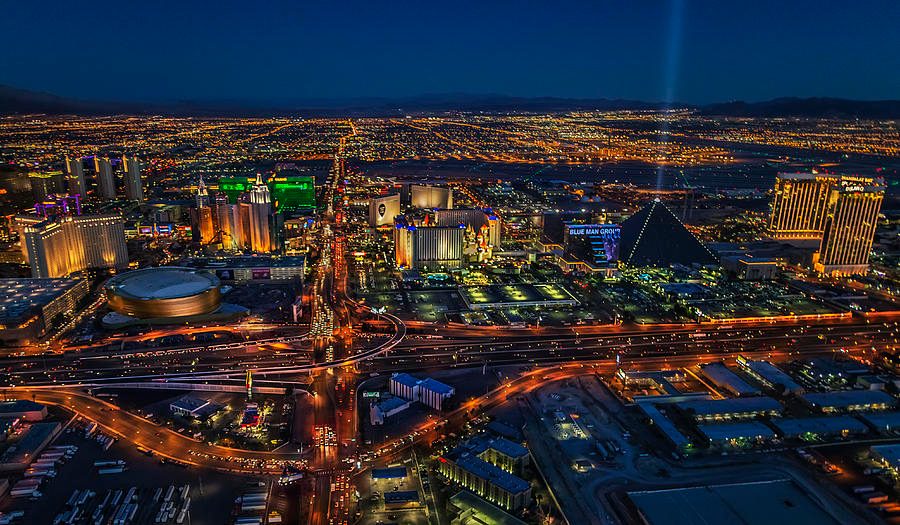
The return leg climbs back through geologic time, exiting the canyon at Guano Point. Past Boulder City the Strip materializes: first the Luxor pyramid, then the Eiffel Tower replica and Bellagio fountains, backlit by the Spring Mountains. You land 70 minutes after departure, the rotors winding down as tour buses inch along Las Vegas Boulevard four miles north.
All the details about your upcoming adventure in one place
More than six million years of erosion carved the Grand Canyon's 277-mile gorge, yet fewer than 5 percent of visitors experience its scale from the air. Commercial helicopter tours from Las Vegas began in 1965, when Bell pilots ferried dam workers between McCarran and Hoover.
Today, regulated flight corridors funnel aircraft over Lake Mead, across the Mojave, and into the Dragon Corridor—the only FAA-approved route below the canyon rim. Operators depart from helipads near Harry Reid International, climbing to 4,000 feet before crossing into Hualapai Nation airspace.
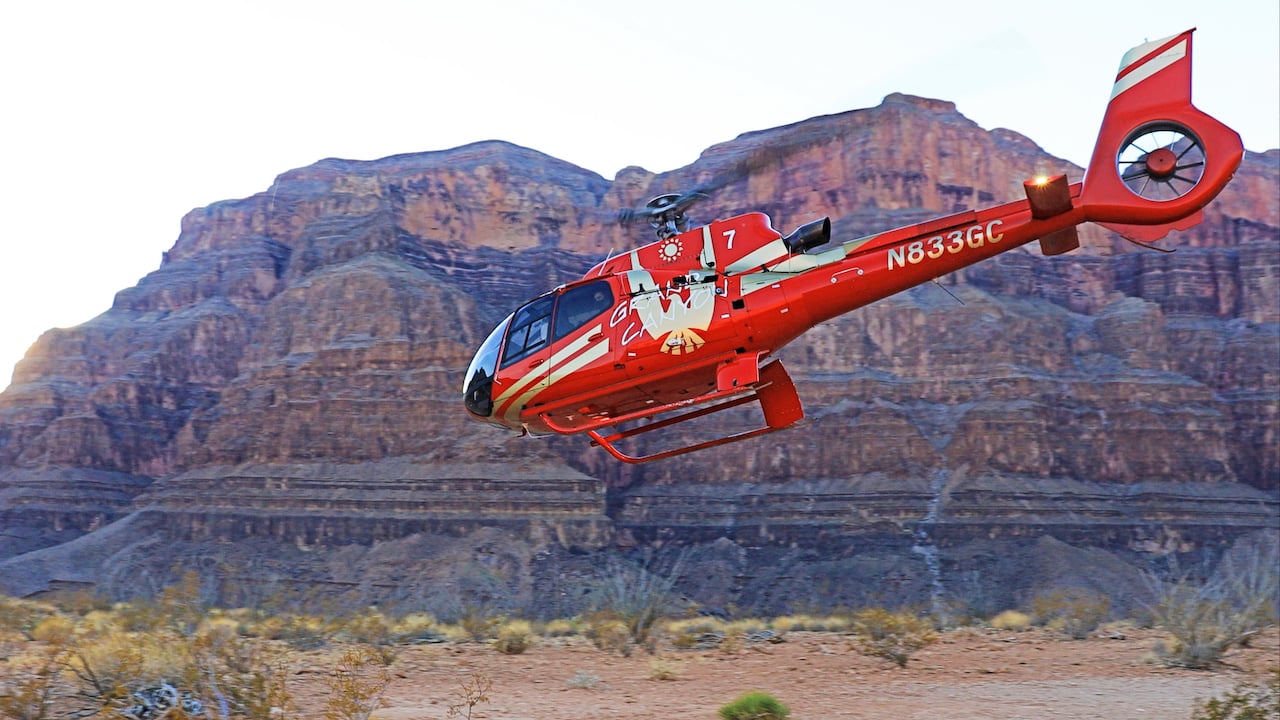
The West Rim sits 125 miles southeast of the Strip, a 35-minute flight that compresses what would be a four-hour drive. Helicopters descend 3,200 feet to private landing zones on the canyon floor, where the Colorado River runs jade-green between Paleozoic sediment layers. The Hualapai Tribe permits landings on ancestral land under agreements that fund infrastructure and employment; no helicopter may touch down within Grand Canyon National Park boundaries, which lie 70 miles east. Champagne service at canyon-bottom platforms became standard in 1998, when tour consolidation pushed operators toward premium differentiation.
Flights return via the Las Vegas Strip corridor after sunset, when the Luxor's 42.3-billion-candlepower beam and Fremont Street's LED canopy render the grid visible from 10 miles out. Aircraft maintain 500-foot separation over populated zones; the Strip flyover adds 12 minutes to standard return routing. Turbulence peaks between 11:00 and 15:00, when thermal updrafts off desert pavement exceed 1,200 feet per minute. Morning slots offer smoother air and sharper light angles for photography—the South Rim's golden hour begins 90 minutes after the West Rim's due to longitudinal offset. Fixed departure windows from 07:00 onward allow operators to cycle five daily rotations per aircraft, with fuel stops at Boulder City for extended Skywalk combinations. Noise abatement protocols mandate Fenestron tail rotors and approach angles that keep decibel levels below 65 dBA at rim overlooks.
The Dragon Corridor remains the only FAA-approved route allowing descent below the canyon rim.
Wear comfortable, weather-appropriate clothing and flat, closed-toe shoes. Avoid loose items like scarves that could flap in the wind near the helicopter.
Security screening is mandatory at all heliports. Only small personal items are permitted on board due to strict weight and balance regulations for aircraft safety.
Photography is permitted during the flight, but flash photography is prohibited inside the cabin. Secure cameras with neck straps to prevent loss through open doors.
Children must meet FAA weight requirements and have their own seat. Infants may require specific safety harnesses provided by the operator.
Most operators can accommodate guests with limited mobility if notified during booking. Specialized lift equipment may be required for certain helicopter models.
Consumption of food and beverages is not permitted during the flight. Water bottles are usually allowed in the terminal but must be stowed during transit.
Opening Hours
07:00–21:00
Address
Las Vegas, NV, USA (Multiple heliports including McCarran/Harry Reid area)
Wheelchair access
Available upon request for select aircraft
Arrival recommendation
07:00–10:00
Storage
Limited storage at heliport terminals
Navigation
Use official GPS coordinates provided at booking
Taxi · 20-30 min · Variable
Direct service to major heliports from Strip resorts
Car · 20-30 min · Free at most sites
Available parking at terminal locations
Full refunds are typically available if a las vegas helicopter ride to grand canyon tour is canceled at least 48 hours in advance. Cancellations made within 24 hours of the departure time are generally non-refundable.
Recommended time
4-5 hours
A typical las vegas helicopter ride to grand canyon includes ground transportation, safety briefings, and flight time. You should budget extra time for check-in protocols at the heliport, as these aerial excursions require arriving well before departure. Because capacity is managed by operators, crowds remain stable, though selecting a morning slot helps you avoid afternoon peak demand for las vegas helicopter ride to grand canyon tours. Plan for a total commitment of half a day to account for rotor-wing prep and transit back to the city for a standard las vegas helicopter ride to grand canyon ticket holders.
Crowd levels through the day
Weather · crowds · average price — dots go green to amber to red as each metric rises.
March to May offer mild temperatures and clear skies for optimal canyon visibility.
June to August involves high temperatures; morning flights are essential for comfort.
September to November provides cool, stable air ideal for photography.
December to February features cold canyon temperatures but excellent air clarity.
Secure your preferred time slot weeks in advance to ensure availability during peak seasons.
Temperatures at the canyon rim are significantly cooler than in Las Vegas.
Every passenger must present a valid government-issued photo ID to board the aircraft.
Flights are subject to cancellation based on wind conditions and visibility.
Follow all instructions given by your pilot during boarding and unloading procedures.
Las Vegas, NV
Check confirmation email for specific hangar assignment.
Get directionsThe las vegas helicopter ride to grand canyon began in earnest during the late 1980s, when deregulation of air tour operations allowed commercial operators to launch scenic flights from Las Vegas to the West Rim. Before that, fixed-wing aircraft had dominated sightseeing routes, but helicopters offered something radically different: the ability to descend below the rim and land on interior plateaus. In 1988, Grand Canyon Airlines became one of the first certificated carriers to offer scheduled helicopter departures from Las Vegas, flying Bell 206 JetRangers on routes that circled Hoover Dam before crossing into Arizona airspace. The National Park Service initially welcomed the revenue stream but grew alarmed as flight volumes swelled past two hundred sorties per day by the mid-1990s. Controversy peaked in 1997 when environmental groups petitioned the Federal Aviation Administration to impose flight-free zones over sensitive archaeological sites and nesting habitats. The resulting rulemaking process dragged on for years, culminating in the 2000 National Parks Air Tour Management Act, which capped annual operations and mandated quiet-technology aircraft. Operators scrambled to retire older models and invest in EC130 EcoStar helicopters, designed with fenestron tail rotors and sound-dampening engine cowlings. By 2005, noise footprints had dropped by nearly forty percent, and visitor complaints fell in parallel. Meanwhile, the Hualapai Tribe opened the Skywalk glass bridge at Eagle Point in 2007, creating a new anchor attraction for las vegas helicopter ride to grand canyon tours and shifting traffic patterns toward the West Rim. Today, more than a dozen certificated operators fly daily routes from heliports near Harry Reid International Airport, carrying over half a million passengers annually. The aircraft fleet is almost entirely composed of Airbus H130 and AS350 models, meeting strict Part 135 standards. Flight paths follow FAA-designated corridors that avoid the North and South Rim wilderness zones, concentrating activity over the less-regulated tribal lands. Despite ongoing debates over carrying capacity, helicopter access remains the fastest way to reach the canyon floor from Las Vegas, preserving a half-century tradition of aerial tourism.
Grand Canyon Airlines launches certificated helicopter tours from Las Vegas, using Bell 206 JetRangers to circle Hoover Dam and reach the West Rim.
Daily flight volumes exceed two hundred sorties, prompting environmental groups to petition the FAA for airspace restrictions.
Congress passes the National Parks Air Tour Management Act, capping annual operations and mandating quieter aircraft technology.
Operators transition to EC130 EcoStar helicopters, cutting noise footprints by forty percent and reducing visitor complaints.
The Hualapai Tribe opens the Skywalk glass bridge at Eagle Point, creating a new destination anchor for helicopter tours.
Fleet modernization continues with Airbus H130 and AS350 models meeting Part 135 commercial standards.
Over half a million passengers fly annually on FAA-designated corridors that avoid wilderness zones while serving tribal lands.
Position your camera to capture the scale of the concrete arch against the Colorado River as the aircraft banks. This is a primary angle during the las vegas helicopter ride to grand canyon.
Focus on the stratified rock walls and the transition to the valley floor during descent. This provides a sense of scale for your las vegas helicopter ride to grand canyon tours.
Shoot the dense urban grid and high-rise landmarks during the final approach to the heliport. This captures the contrast to the natural terrain of your las vegas helicopter ride to grand canyon tour.
The blue water provides a distinct color break from the desert landscape during the return flight for those holding las vegas helicopter ride to grand canyon tickets.
A las vegas helicopter ride to grand canyon is a memorable way for families to see the landscape from a unique perspective. While flights are generally accessible for all ages, careful planning around seating, weight requirements, and preparation for young children is essential for a smooth experience.
Children 23 months and younger are typically considered lap children and may fly for free, though you must provide proof of age such as a passport or birth certificate. Any child 24 months or older generally requires a full-fare seat, and all passengers must be weighed upon arrival for safety and aircraft balance.
Helicopter flights can sometimes cause motion sickness in younger travelers. Consider consulting a pediatrician about over-the-counter remedies like motion sickness medication, or bring ginger ale and salty crackers to help keep your child comfortable during the las vegas helicopter ride to grand canyon tours.
The helicopter cabin can be loud during flight, which might startle younger passengers. Many operators provide noise-canceling headsets for all guests, but you may want to bring child-sized ear protection if you are worried about their sensitivity to sound.
Seats are assigned by the operator to ensure proper weight distribution for the aircraft. This means families might not be seated together, so prepare older children for the possibility of sitting in different rows or next to the pilot while enjoying their las vegas helicopter ride to grand canyon tour.
Always bring a valid photo ID for all passengers over the age of 16. If you are traveling with a lap infant, have their birth certificate or passport ready to verify their age, as this is often required to secure your las vegas helicopter ride to grand canyon tickets.
Most heliports near the McCarran/Harry Reid area offer limited on-site dining, so those planning a las vegas helicopter ride to grand canyon often rely on nearby quick-service options. Visitors securing las vegas helicopter ride to grand canyon tickets should prioritize establishments within a short drive of the terminal for pre-flight meals.
Located near the aviation hubs, this spot serves classic American breakfast and lunch options. It is a practical choice for fueling up before your las vegas helicopter ride to grand canyon tour.
Everything you need to know for your journey
Operators typically run flights daily between 07:00 and 21:00. These hours provide flexibility for your travel schedule.
There is a 0 USD entry fee for the heliport, though tour prices cover the service costs.
Arrival between 07:00 and 10:00 is recommended for the smoothest air and best visibility before midday heat.
Yes, you can take photos, but ensure your gear is secure and do not use flash inside the helicopter cabin.
Children are welcome, provided they meet safety and weight requirements as mandated by FAA regulations.
Due to strict weight limits, bags are generally prohibited inside the cabin; check with your specific operator.
You can purchase las vegas helicopter ride to grand canyon tickets through official operator websites or authorized booking platforms.
Most operators offer a refund or rebooking options if weather causes a cancellation of your las vegas helicopter ride to grand canyon.
Yes, due to flight safety and balance, passengers may be weighed during check-in for the las vegas helicopter ride to grand canyon.
Engineering marvel visible during transit.
Expansive reservoir viewable from the air.
Starting point for most canyon departures.
Scenic geologic formations near the city.
Central access to all heliport shuttles.
Proximity to regional flight departure points.
Join thousands of happy travelers who have discovered this incredible experience
Book Your Experience Now